
Even in such dark times as these, now is the moment we need to speak of liberation. The current military conflicts initiated by the United States and Israel have revealed the continuing force and pressure of global dynamics and processes in a situation in which the world market appears at once fractured and effective. In the face of proliferating wars and war regimes, new theories and practices of internationalism are necessary to mount resistance to these threats. A new internationalism must also, however, create a positive project, generating the bases of a common struggle for liberation. This article is dedicated to this necessary connection between internationalism and a politics of liberation. Before addressing internationalism, however, we need to take stock of the dangers and limits of current forms of imperialism and war, in part because the persistent global military and economic dynamics confirm the possibility and the necessity of an internationalist politics today.
Seeing the world in the reflection of Hormuz
The massive attacks on Iran that started in late February 2026 have, indeed, laid bare the limits of US and Israeli power. Iran’s resistance to and survival of the attacks have revealed a new modality of asymmetrical warfare, symbolized by the Strait of Hormuz. The US’s and Israel’s strategy was to target what they perceived as the center of Iran’s power. Targeted assassinations of key political, religious, and military figures, as well as strikes on core military installations and strategic infrastructures, were assumed to precipitate the downfall of the regime and to annul its military capabilities. Instead, despite enormous losses, Iran’s decentralized and networked structures of both political and military power proved to be resilient. This resembles but also differs in important ways from previous assumptions about asymmetrical warfare, which has been based primarily on guerrilla tactics and non-state militias confronting a military occupation. Iran has developed a state strategy, which functions even though there is no occupying force to attack. Decentralization has allowed Iran to weather the extreme bombings and retain some effective military capacities.
Most significant was Iran’s weaponization of the Strait of Hormuz, which has become a primary logistical hub whose importance extends well beyond the oil market. With small attack boats and mines – or even simply the threat of using them – Iran has effectively disrupted not only the global energy market but also, as Adam Hanieh explains, the global food market, which requires fertilizers for current methods of agricultural production. Iran, given its geographical position, has turned dependency on shipping through the Strait into a weapon that threatens especially the economies and power structures in the region. The immensely successful model of economic development of the Gulf, with its shining airports and gleaming urban skylines, was blown up in the course of a few days, with tensions emerging among states, and most notably between Saudi Arabia and the United Arab Emirates. These divisions also threw into disarray Israel’s project of regional economic and security alliances. Without the support of these alliances, Israel’s expansionist wars, including the current military incursions from Southern Lebanon to Beirut, suddenly stand on less stable ground, leaving little beyond the logic of military occupation, ethnic cleansing, and territorial annexation to justify their continuation.
In addition, in the Strait of Hormuz, Iran has also managed to turn the world market against the United States, demonstrating the persisting interdependence of the global capitalist system. The United States has long sought energy independence and thought it had achieved it through increased domestic oil and gas production. But the world market’s reaction to closing the Strait of Hormuz proved that no such autonomy is possible. Some regions suffer the consequences of logistical disruptions and rising energy prices more than others, but even supposedly independent economies are profoundly affected. The world is not flat, but the world market continues to impose its power and conditions, precisely through the fractures that increasingly traverse it. It is ironic that Iran, relatively isolated in the international system, is the nation to demonstrate the persistence of global dynamics and the inevitability of their pressures.
In the first days of this wave of US and Israeli bombings, their military weaponry, augmented by artificial intelligence and surveillance systems, seemed invincible, but, by now, the situation has instead revealed the real limits to their power. The destructive force of these deadly arsenals is undeniable, and so is the suffering they cause. And yet, all that firepower has proven incapable of achieving their stated goals and defeating an enemy with much lower military capacities. Once again, asymmetrical warfare has turned assumptions upside down.
The memorandum of understanding signed by the United States and Iran on 17 June has not substantially altered the situation. It simply confirms the stalemate, which will not lead to a real peace, but rather the continuation of the war regime, that is, a governmental rationality that includes a generalization of low and high-intensity military confrontations along with a militarization of economic and social relations. War ceases to be an exceptional condition and becomes a permanent mechanism for governing a fractured world. This war regime develops against the backdrop of the persisting presence and pressure of the global dynamics and processes that are so apparent in the Strait of Hormuz.
These global dynamics and processes, although often invisible, are at the heart of the developing global war regime. How can we intervene in these processes and chart new paths to destroy and move beyond this perpetual state of disruption and destruction? What kind of internationalism can confront the current conjuncture of war?
A multilevel internationalism
Although many scholars and activists feel that calls for internationalism are far from our everyday lives and the concrete struggles in which our passions are invested, it should be clear that the stakes of internationalism today are far from abstract. We should not get caught in the old debates between the global and the local, as if these were exclusive choices and terrains.
On the one hand, global pressures and forces are very real and active in everyday local situations, in a way that may be different from the Strait of Hormuz but no less effective. On the other hand, numerous concrete connections and powerful resonances among local struggles can already be glimpsed, but need to be emphasized and developed.
One of the successes of the alterglobalization movement at the beginning of the millennium was to trace the connections of production and consumption. For example, Students against Sweatshops demonstrated how clothing and merchandise sold in the great chain stores in San Francisco and London rely on abominable labor conditions in Cambodia and Vietnam. These connections may not be immediately visible, but they are just below the surface.
The totality of global capital resists representation, as many, such as Fred Jameson, have remarked. Eisenstein’s incomplete film project on Capital can serve as an emblem of this difficulty. But we can nonetheless reveal some of its trajectories and instances as well as the concrete power structures and actors upon which it relies. Moreover, the world that capital makes – or, to be more precise, the world that results from manifold forms of capitalist exploitation and dispossession of living labor and subaltern populations – is far from smooth. It is rather defined by both homogenizing and heterogenizing vectors, composed of diverse political, economic, and social regimes. Even though the totality cannot be grasped, we can achieve partial and functional understandings of the contours and operations of global capital.
Just as the capitalist world is heterogeneous, so are the struggles that confront it across the globe. The multiplicity and diversity of these struggles are the inevitable basis and reference for any internationalist project today. Therefore, such a project must have a mixed constitution and be pursued on several levels that function together.
Although internationalism must be a project of insurgency that combats the existing order, even nation-states and supranational institutions can make valuable contributions at one level. In some respects, this continues 20th-century internationalist traditions of collaborations among states and movements, from the Comintern to Bandung. In past years, for example, projects for regional alliance among progressive governments in Latin America gestured toward and functioned as, in limited ways and despite their contradictions, an alternative to neoliberalism and the Washington Consensus. More recently, South Africa’s genocide case brought against Israel in the International Court of Justice demonstrated another institutional path. South Africa effectively used the supranational institutional infrastructure to open a new space for movements in support of Palestine in a variety of national contexts. The case empowered the movements, in part, by validating the accusation of genocide in legal terms.
States and supranational institutions, however, although they can play significant roles, cannot be the sole or even prime force of internationalism today. Social movements and activist projects are the source of political innovation and are necessary components of any internationalist project. We have to consider social movements beyond the simple image of banners and marches, as well as the restrictive understandings provided by sociological models. Movements include a panoply of collective practices and behaviors that actively confront or exist in tension with institutional power structures. Furthermore, we have to free our conception of social movements from the old divisions between theory and practice. Movements are also conceptual incubators that collectively develop concepts and functional understandings of the world.
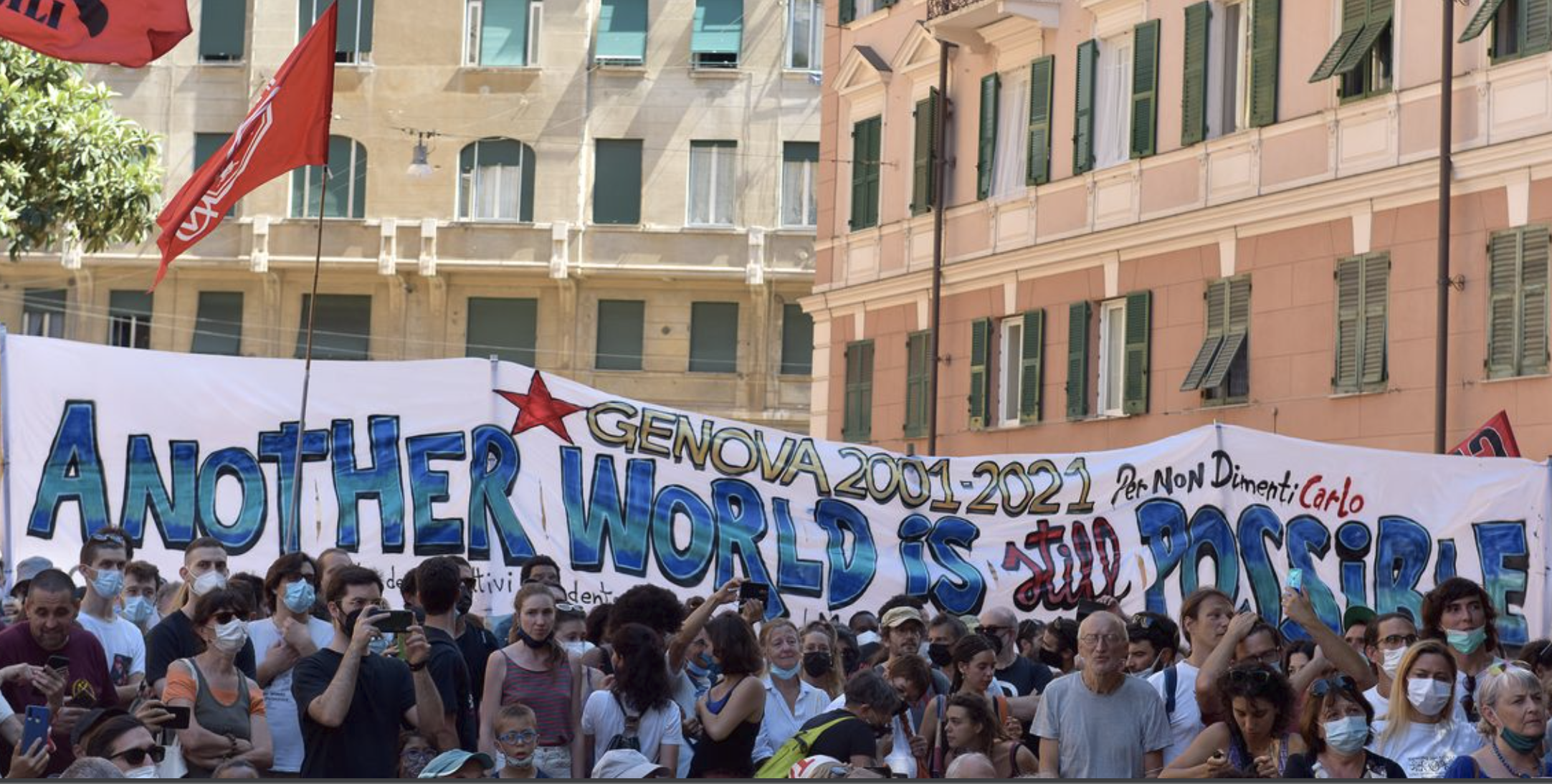
Importantly, internationalism must be a multi-level project also in spatial terms. One of the obstacles faced by the alterglobalization movement was the assumption that to intervene in global processes one had to travel to power centers and summits, from Seattle to Gothenburg and Genoa. This created a kind of division of labor between the activists who were able to travel internationally and those who remained to work in localized and rooted contexts, resulting in a kind of impasse that eventually disempowered the movements. What a multi-level conception maintains is that there are many paths or modes to intervene in the global power processes, and that internationalist struggles can start in the neighborhood or the city, the nation or the region, and engage the larger structures from there. One of the challenges, then, is how to connect these different levels and varied geographies while acknowledging their unstable and shifting nature in the present.
Internationalism of resistance
Movements and networks of resistance and solidarity are the context in which internationalism is most concrete and present in the minds of many activists. In recent years, support for Palestine and opposition to the Israeli genocide have animated the most intense and widespread internationalist resistance movements. From student tent encampments to port blockages and street demonstrations, Palestine has served as a point of connection and synthesis. The Global Sumud Flotilla’s several attempts to reach Gaza by sea and deliver humanitarian aid have been both eminent instances of and catalysts for internationalist action. In addition, support for Palestine has energized and become embedded in activism aimed at local and national political issues. Protesting the genocide has served to help people recognize the wider scene of the war regime.
The constellation of pro-Palestine forces also includes state and supranational actors. In addition to South Africa, as we mentioned earlier, Ireland, Spain, and other states, as well as the General Assembly of the United Nations, have denounced Israeli massacres. Even though the political positions of these institutions can be ambiguous, their protests remain effective, at least in helping delegitimize Israel’s genocidal actions.
Furthermore, international law is today undergoing a double process. On the one hand, it has proven utterly unable to address even the most egregious violations, but, on the other, a range of new appeals to international law and attempts to reformulate its functioning are emerging. As Giso Amendola argues, the violent attack on international law by powers such as the United States, which have historically applied international law differentially to suit their interests and legitimize their hegemony, should not be read simply as a sign of its exhaustion. While the traditional “rules-based” liberal international order may be over, there is emerging, instead, a contested terrain on which legal tools and discourses can forge new constituent projects through state initiatives and social movements, opening new horizons for internationalist struggle.
At these different levels, the name Gaza has become a point of condensation through which diverse experiences of domination, dispossession, militarization, and resistance intersect, creating conditions for mutual recognition and political translation across different struggles. Political translation does not erase differences but creates the possibility of recognizing common logics of domination and shared horizons of resistance across distinct historical and geographical contexts.
Seen from this perspective, the Americas have become another crucial terrain on which the war regime is experienced and contested. The widespread resonance of solidarity with Palestine throughout the hemisphere is one indication of this. Gaza has become a point of reference not only for movements of resistance but also, increasingly, for the political alignments that traverse the region, as Javier Milei’s close relationship with Netanyahu makes particularly clear.
How should we approach, then, an internationalism of resistance in the Americas, which have once again become a scene of imperialist aggression and reactionary coalitions? We can recognize, for a start, how the deployment of violence against migrants and populations that support them in US cities mirrors the US government’s imperialist attempts to control other states in the hemisphere with violence and other methods of coercion, including the kidnapping of Nicolas Maduro and the “takeover” of the Venezuelan government, quickly followed by the US’s attempt to strangle and starve Cuba. Recent US government declarations to renew and reinforce the Monroe Doctrine foreshadow the transformation of the Americas into a coherent bloc under US control, opposed to “foreign” intervention, including, above all, Chinese infrastructural projects.
The creation of a hemispheric bloc, which exceeds the strictly military resonances of the term, extends to the governmental level. The wave of reactionary governments in Latin America has emerged in tandem with and facilitated by the United States. As Rodrigo Nunes argues, there is a complex interplay between Bolsonarismo in Brazil and Trumpism in the United States. One cannot understand the rise and function of other far-right governments, including those of Milei, Bukele, and Noboa, without situating them in a hemispheric context. The resonances among these reactionary regimes and their policies are evident, as Pablo Stefanoni among others emphasizes, but there are also direct material and financial connections. A clear nexus links the project to create a political bloc and the authoritarianism of individual governments and political forces. War regimes of these far-right forces also configure internal wars against segments of their own populations, from immigrants and the indigenous to feminist and queer communities.
The coherence of reactionary forces throughout the Americas makes newly possible and necessary to establish internationalist connections among resistance movements. Opposition to ICE in Minneapolis and protests against Milei in Argentina should both be conceived and organized with an eye toward internationalist hemispheric struggles. In Latin America, in order to be internationalist, resistance and solidarity movements must also take form on the regional level, in line with a long history of struggle under the banner of “nuestra América,” a name once again invoked by the convoy of humanitarian to Cuba.
Like the instances of internationalist resistance oriented toward Palestine we sketched above, internationalist struggles in the Americas (as well as those in South Asia, West Africa, and elsewhere) are characterized by specific, concrete political situations and histories. And yet, there exist potential connections among them, across localities and regions, which, with organization, can be realized. And the need for organization is all the more urgent since the forces we struggle against are increasingly consolidated on a transnational scale.
In many contexts across the globe today, the logic of nationalism and the process of constituting blocs are indeed immediately linked to practices of war. In some cases, reactionary nationalist projects, when the nations are themselves sub-continents, such as India or Russia, already rise to the level of bloc. Israel has attempted, as we said earlier, to link its nationalist drive to create something like a bloc through alliances with Gulf States and the still faithful support of the United States. The European case is different, but the pressures toward rearmament and the increasing weight of national and nationalist powers within the Union may end up having a similar result, especially in view of the potential for increasingly far-right governments. In all such cases, resistance to these powers, which fuse nation and bloc with a war logic, is a first step toward both an anti-war politics and an internationalist project.
Internationalism of liberation
Practices of resistance are essential, and resistance, as we said, is the political stance that often can be most easily grasped, but we need also to take another step and initiate a process of collective transformation. This is where the framework of liberation must take center stage. Some might believe that, facing such dark times as we are today, when the horizon of so many is reduced to mere survival, our aims should be more modest. We maintain, on the contrary, that now more than ever is the moment to speak of liberation. We need a positive framework – expressing not only what we oppose but also what we are struggling for. Under contemporary conditions, facing the global dynamics and processes of capitalist and authoritarian control, only an internationalist politics can provide a realistic horizon for liberation.
Liberation is what distinguishes internationalism from a merely geopolitical understanding of anti-imperialism. Anti imperialism itself is not a politics. Imperialist adventures must be opposed, but what really matters is opening spaces where tactics of resistance can lead to strategic horizons of liberation.
But what does liberation mean at this level of analysis? What criteria distinguish it? There are no simple answers to these questions. We can attempt a general definition: liberation is a project to transform, through struggles, both the material conditions of life and the related forms of subjectivity, while discovering and developing new democratic ways of living together and forms of social cooperation that free us from individualism and empower us. But general definitions can only take us so far. Our understanding of liberation can be better informed, first of all, by the long and varied history of liberation movements, which must, however, be reactivated creatively without any nostalgia since the political context has changed dramatically and so have the subjectivities of activists in struggle. Second, we should look within the movements: even in the direst conditions, resistance and solidarity movements are always traversed and sustained by new relations that can serve as a basis for liberation. Liberation is not achieved with an event once and for all, but is a constant struggle, which constitutes the positive horizon of our political desires.
Liberation will clearly take different forms depending on geographical and cultural contexts, and even among groups in the same location. We should not expect projects for feminist liberation to be the same as those for racial or workers’ liberation – and each of these varies with material and geographical conditions. Domination and exploitation are never identical from one place to another, even when they are driven by common forces and logics. Partly for that reason, the histories, social compositions, needs, and desires of the struggles that emerge against them also differ. The challenge is not to erase these differences but to build practices of translation through which they can enter into common projects of liberation.
Translation, in this context, is not the search for a common measure or a shared identity. It is a political practice through which heterogeneous struggles establish connections across different histories, conditions, and vocabularies, producing new possibilities for acting in common while transforming themselves in the process. In this sense, the horizon of liberation we are thinking of is traversed and inhabited by a multiplicity of experiences, claims, and imaginaries – which nonetheless can be organized to produce a new collective power.
An internationalism of liberation, then, does not constitute a solution but instead the problematic within which political issues must be addressed. It is not the recognition that, at base, we are all the same. Internationalism requires a strategic decision and dedication to political organization, establishing networks and multiplying connections both geographically across countries, regions, and continents and politically among sectors of the movement. Internationalism thus provides a standpoint, or even a method to guide political action and political theory. Taking the world, its unity and its fractures, as the main reference for addressing even the most localized issues is the basis for developing internationalism as a political project. By working through and developing the resonances among distant struggles and experiences, new political continents can be discovered.
Note: This text was prepared for a presentation at the European Parliament organized by “The Left” coalition on 10 June 2026.
The article was originally published in the Portolan Journal on June 20, 2026.