The Sahrawi people, a nomadic community in North Africa influenced by Berber, African and Arab cultures – and whose name means ‘inhabitants of the desert’ – number around half a million and speak Hassaniya Arabic. The Sahrawis began to adopt Islam in the 7th and 8th centuries and lived for many years under Spanish occupation.
In 1975, as Spain was preparing to withdraw, the Sahrawis founded the Polisario Front. Following Spain’s withdrawal, the organisation faced the Moroccan occupation of the territory. With the aim of filling the administrative vacuum that had been created, the Polisario Front proclaimed the Sahrawi Arab Democratic Republic (SADR) on 27 February 1976 and launched an armed struggle against Morocco. Subsequently, the UN intervened and proposed a referendum in exchange for an end to the armed struggle.
However, three decades of political manoeuvring favoured Morocco, and the promised referendum was never held. The Polisario Front, which viewed this process as a ‘consolidation of the occupation’, resumed the armed struggle on 13 November 2020.
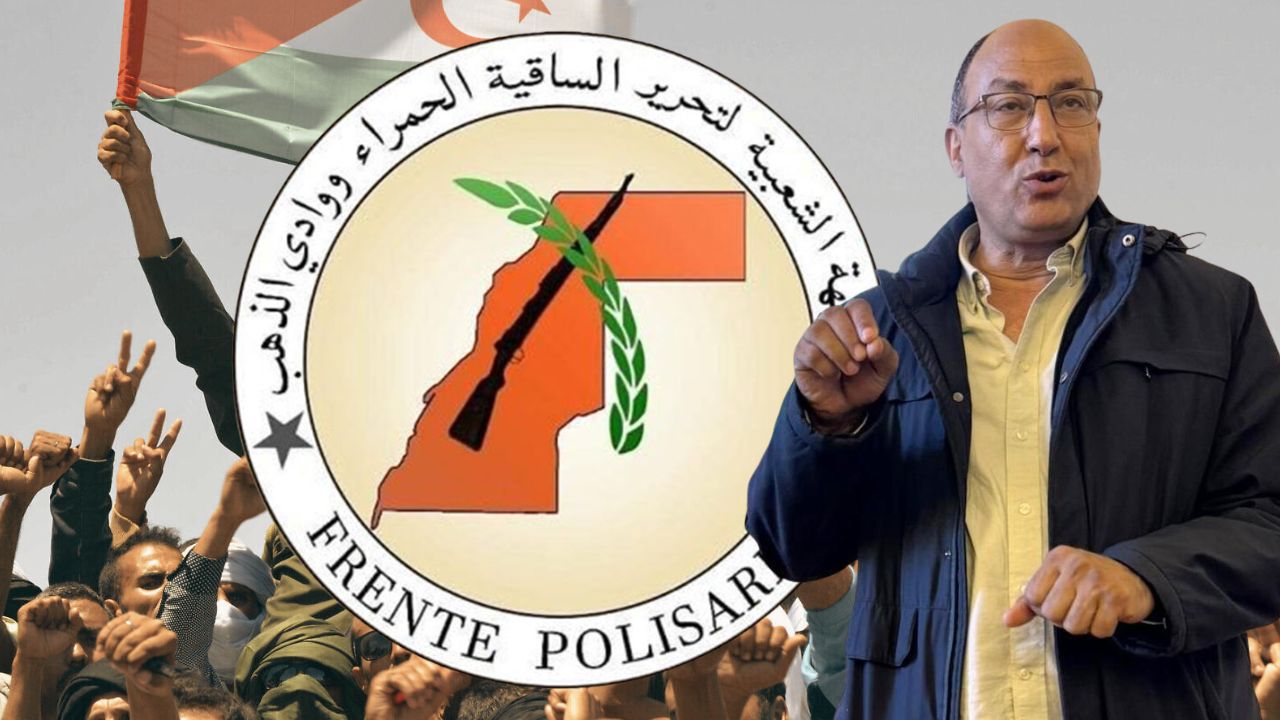
We discussed these recent developments with Mohamed Salem Ahmed Laabeid, the Polisario Front’s representative in Catalonia. In our interview, we asked him about the importance the Sahrawi people attach to education, diplomacy and efforts to preserve national unity. We also addressed the difficult struggle currently being faced by the Sahrawi people, the causes of a conflict that is barely known to the general public, and their main demands.
A Moroccan drone strike in early June killed Lahbib Mohamed Abdelaziz, a member of the Polisario Front’s National Secretariat and also a military commander. How did this escalation of the Western Sahara conflict come about, and why is it flaring up again now?
The current escalation did not begin with that attack. It is the logical consequence of the failure of the UN-led peace process and Morocco’s ongoing attempts to impose a already done deal in Western Sahara. For almost thirty years, the Polisario Front respected the 1991 ceasefire and cooperated with all UN efforts to hold the referendum on self-determination promised to the Sahrawi people. However, that referendum was never held. Meanwhile, Morocco consolidated its occupation by building military infrastructure, exploiting the territory’s natural resources, carrying out repression in the occupied territories and progressively altering the reality on the ground.
The turning point came on 13 November 2020, when Moroccan forces intervened in the Guerguerat area – an occupied zone – where Morocco had opened an illegal corridor to export Sahrawi natural resources to the rest of Africa. From that moment onwards, the Polisario Front declared the 1991 agreement to be null and void and announced the resumption of armed struggle. Since then, the conflict has entered a new phase characterised by almost daily clashes along the Moroccan military wall and by the use of new technologies, such as drones, which have increased the number of casualties amongst Sahrawi combatants.
Therefore, the attack referred to in the question is not the cause of the escalation, but rather a consequence of a war which, from our perspective in the Polisario Front, would never have happened again had the United Nations fulfilled its commitment to organise the referendum on self-determination, and due to the intransigence of the Kingdom of Morocco.
The Polisario Front was founded in 1973 in opposition to Spanish colonial rule. How did the population support the movement at that time?
Yes. The Polisario Front was founded on 10 May 1973 in opposition to Spanish colonialism. It adopted the slogan: ‘With the rifle we shall seize freedom’, following the failure of peaceful attempts to end colonialism in Western Sahara. The reality of colonialism, marginalisation, exclusion and the policies of starvation and ignorance promoted by Spain were utterly unacceptable. This prompted a swift and widespread response from the Sahrawi people to the movement, a fact that was clearly reflected in the United Nations fact-finding mission that visited the region in May 1975. The mission confirmed that the inhabitants of the territory were united in their desire to achieve independence and that the Polisario Front was the dominant political force in Western Sahara.
Following Spain’s withdrawal in 1975, Morocco occupied Western Sahara. What were the reasons for this, and how did the Polisario Front react?
Firstly, we must understand that Spain’s chaotic withdrawal from Western Sahara was the result of an agreement between the very same powers that, to this day, continue to sponsor, support and legitimise the Moroccan occupation.
The positions of these powers have remained virtually unchanged since 1974. The position of the United States, represented at the time by Secretary of State Henry Kissinger, is, in essence, the same as that maintained today under the presidency of Donald Trump. Similarly, France’s position under the presidency of Valéry Giscard d’Estaing is comparable to that held today under the presidency of Emmanuel Macron. Likewise, Spain’s position during the regime of Francisco Franco and the reign of Juan Carlos I is similar to that held today under the reign of Felipe VI and the government led by Pedro Sánchez.
Everything had been planned in advance: the Moroccan military invasion, the so-called Green March1, the Madrid Tripartite Agreements and other events were conceived prior to the session of the United Nations General Assembly held in October 1975, during which the International Court of Justice in The Hague was due to issue its advisory opinion and the United Nations fact-finding mission was due to present its report. In other words, Spain’s withdrawal formed part of an agreement between these powers and the Moroccan occupation regime.
As for the Polisario Front’s response, it was to be expected from a national liberation movement representing a people subjected to a war of extermination, whose land, dignity and lives had been violated by invading forces from the north – Morocco – and from the south – Mauritania.
The priority was to protect the civilian population by moving them to safe areas to shield them from bombardments with white phosphor and napalm, as well as from other forms of violence, including executions, burials in mass graves and air strikes against the population.
At the same time, the Polisario Front organised the defence of the territory against the invasion, initiating what it calls the ‘positive defence phase’.
The United Nations brokered a ceasefire in 1991. In return, a referendum was to be held in which the Sahrawi people could choose between independence and integration into Morocco. What has become of that promise?
Yes. To answer this question clearly, it is necessary to recall that, after sixteen years of war (1975–1991), the Sahrawi People’s Liberation Army forced Morocco to accept the joint proposals of the Organisation of African Unity (OAU), now the African Union (AU), and the United Nations.
Morocco signed these proposals on 31 August 1988. They subsequently gave rise to the United Nations Peace Plan, which was accepted by both parties and unanimously approved by the United Nations Security Council. The plan came into force on 1 September 1991, with the Polisario Front declaring a ceasefire in exchange for the United Nations organising a referendum through which the Sahrawi people could democratically choose between independence and integration into Morocco. To this end, the United Nations Mission for the Referendum in Western Sahara (MINURSO) was established.
The plan, both in terms of its content and its implementation mechanism, was sound, as it envisaged completing the decolonisation process within approximately six months, enabling the Sahrawi people to return to a free and independent Western Sahara.
However, that promise was never fulfilled. More than thirty years on, the Sahrawi people believe that the referendum was replaced by a process that ultimately benefited the occupying power and pushed the possibility of exercising the right to self-determination further out of reach.
After 1991, the Polisario Front evolved from a guerrilla movement into an institutionalised political organisation. What were the greatest challenges of this process?
On 27 February 1976, the Polisario Front proclaimed the Sahrawi Arab Democratic Republic (SADR). This decision was driven, firstly, by the need to fill the administrative vacuum left by Spain’s withdrawal from Western Sahara; secondly, to comply with the principles of the Charter of the Organisation of African Unity, which encouraged African national liberation movements to establish their own states; and, finally, to the desire to organise the Sahrawi refugee population institutionally and lay the foundations for the future state. The main challenges were as follows: Internally, organising a very large refugee population, establishing a national administration, ensuring basic services, training qualified personnel for the education and health sectors, and developing democratic institutions that would enable citizen participation in political and administrative decision-making.
The greatest difficulty lay in securing the necessary material and financial resources, owing to the lack of infrastructure and the constraints inherent to a refugee population.
Externally, the main challenge was to secure international recognition of the Sahrawi Arab Democratic Republic and its admission to African regional organisations, as well as to gradually increase the number of states officially recognising the new state.
Since then, the Polisario Front has been firmly committed to diplomacy. Which international achievements do you consider most significant?
The diplomatic route has been one of the Polisario Front’s main strategies. In just four years, the Sahrawi Arab Democratic Republic (SADR) secured admission as a member of the Organisation of African Unity (OAU). As a result, Morocco decided to withdraw from the organisation in 1984.
The SADR’s membership of the African organisation facilitated its participation in continental activities and in numerous international forums, enabling it to establish diplomatic relations with countries on other continents, particularly in Latin America, where many states officially recognised the SADR and established bilateral relations.
When the African Union (AU) replaced the OAU in 2002, the SADR became one of its founding member states. Since then, the African Union has adopted various resolutions in support of the decolonisation process in Western Sahara, has reaffirmed the Sahrawi people’s right to self-determination, and has appointed special representatives to monitor the conflict.
Furthermore, the African Union has insisted that the SADR participate in the summits and meetings it holds with other international organisations.
With the aim of limiting the African Union’s role in the conflict, Morocco applied to rejoin the organisation, which took effect in 2017, accepting the Constitutive Act of the African Union, in which the Sahrawi Arab Democratic Republic is listed as a member state.
In November 2020, the Polisario Front declared an end to the ceasefire. Why? Where did international mediation and diplomacy fail?
For thirty years, the process was led by major powers which, in the view of the Polisario Front, consistently supported Morocco and helped to consolidate the occupation of Western Sahara.
Throughout that period, the Polisario Front has accepted all initiatives put forward by the United Nations. It participated in all rounds of negotiations in good faith, accepted the broadening of the electoral base for the referendum, released all prisoners of war — around 4,000 —, accepted the Houston Agreements, endorsed the Baker Plan, put forward proposals to facilitate a negotiated solution, and agreed to hold direct talks with Morocco without preconditions, with the aim of reaching a political, just and lasting solution that would guarantee the inalienable right of the Sahrawi people to self-determination, in accordance with the Charter of the United Nations.
But we realised that, throughout those same thirty years, Morocco systematically obstructed the process. It made voter registration difficult, promoted the expansion of the electoral roll, repeatedly breached the ceasefire, reinforced and modernised its military positions along the wall, intensified repression against the Sahrawi population in the occupied territories of Western Sahara, and rejected various peace initiatives, including the Baker Plan, as well as the continuation of negotiations without first imposing its own proposal.
Furthermore, Morocco opened a breach and built a road in an area to the east of the wall, altering the situation established by the 1991 ceasefire. These events culminated in the developments of 13 November 2020, when the Polisario Front declared the ceasefire to be over and announced the resumption of armed struggle.
From the Polisario Front’s perspective, the United Nations Security Council resolutions have gradually shifted from an approach centred on the referendum on self-determination towards more ambiguous political formulas. We consider that this has weakened the decolonisation process and favoured the maintenance of the status quo.
We in the Polisario Front also criticise the fact that MINURSO remains one of the few United Nations peacekeeping operations without a specific mandate to monitor and protect human rights. We also denounce the lack of effective measures to address the exploitation of Western Sahara’s natural resources and the successive breaches of the ceasefire.
Consequently, we consider that the United Nations Peace Plan has failed and that, since November 2020, the conflict has once again taken a military turn.
The Polisario Front administers the refugee camps in Algeria. How does this administration work and what international support does it receive?
The Polisario Front has built a genuine state in exile, with fully organised institutions, and not merely a government in exile.
There is a clear separation of powers between the legislative, executive and judicial branches, as well as an administrative structure organised into provinces, municipalities and neighbourhoods, each with its own representative bodies.
We also have our own education and healthcare systems, which meet international standards, as well as the ministries and institutions necessary for the functioning of the public administration.
The Sahrawi Arab Democratic Republic has official identity documents, passports, family registers and other administrative records. We also have a national currency, the Sahrawi peseta, although it is not currently in circulation as a means of payment.
What social and political structures help the Sahrawi people to cope with this difficult situation?
The main strength of the Sahrawi people has been their capacity for organisation. Despite exile, occupation and the difficulties arising from a situation that has dragged on for decades, the Sahrawis have managed to build political and social institutions that guarantee the cohesion of the Sahrawi people and the continuity of the national project.
In the refugee camps, there is widespread public participation in public life through the institutions of the Sahrawi Arab Democratic Republic, local authorities, the Polisario Front and mass organisations – particularly women’s, youth, workers’ and students’ organisations – which play a fundamental role in education, social mobilisation and the preservation of national identity.
Education is one of the fundamental pillars. From the earliest years of exile, there has been a commitment to the education of the younger generations, including sending thousands of students to universities in friendly countries. Similarly, the healthcare system, solidarity amongst families and voluntary work have made it possible to cope with the difficult living conditions in the camps.
Another essential element is national unity. The Sahrawi people maintain a strong sense of collective identity and a shared conviction that self-determination and independence are rights recognised under international law. This conviction, together with the international solidarity they receive from numerous peoples, organisations and support movements, has enabled them to sustain their resistance for more than five decades.
What is the Polisario Front calling for today regarding the future of its people?
The Polisario Front calls, fundamentally, for: Respect for international law and international legal norms applicable to Western Sahara, a territory which the United Nations considers to be pending decolonisation. Compliance with the resolutions of the United Nations and the African Union relating to the decolonisation process of Western Sahara. That the inalienable right of the Sahrawi people to self-determination be guaranteed through the holding of a free and democratic referendum organised by the United Nations, with the necessary international safeguards. That a permanent, independent and effective mechanism be established to monitor human rights in the occupied territories, as well as to protect the natural resources of Western Sahara.
About Mohamed Salem Ahmed Laabeid
He was born in 1964 in the town of Mahbes, in northeastern Western Sahara. Laabeid studied civil engineering and later worked as a teacher of mathematics and physics. As part of his political activities, he also worked as a journalist and was one of the founders of the Sahrawi Arab Democratic Republic’s television station, which he headed for 23 years. He currently serves as the Polisario Front’s representative in Catalonia.
1 The Green March was a mass demonstration in November 1975, coordinated by the Moroccan government and military, to pressure Spain to hand over the disputed territory of Western Sahara to Morocco.