FINAL STATEMENT FOR THE OTHER EUROPE
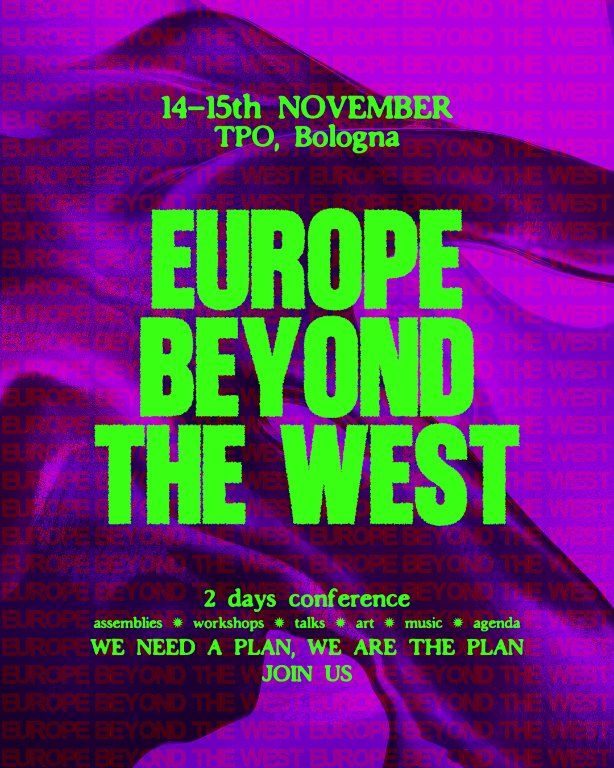
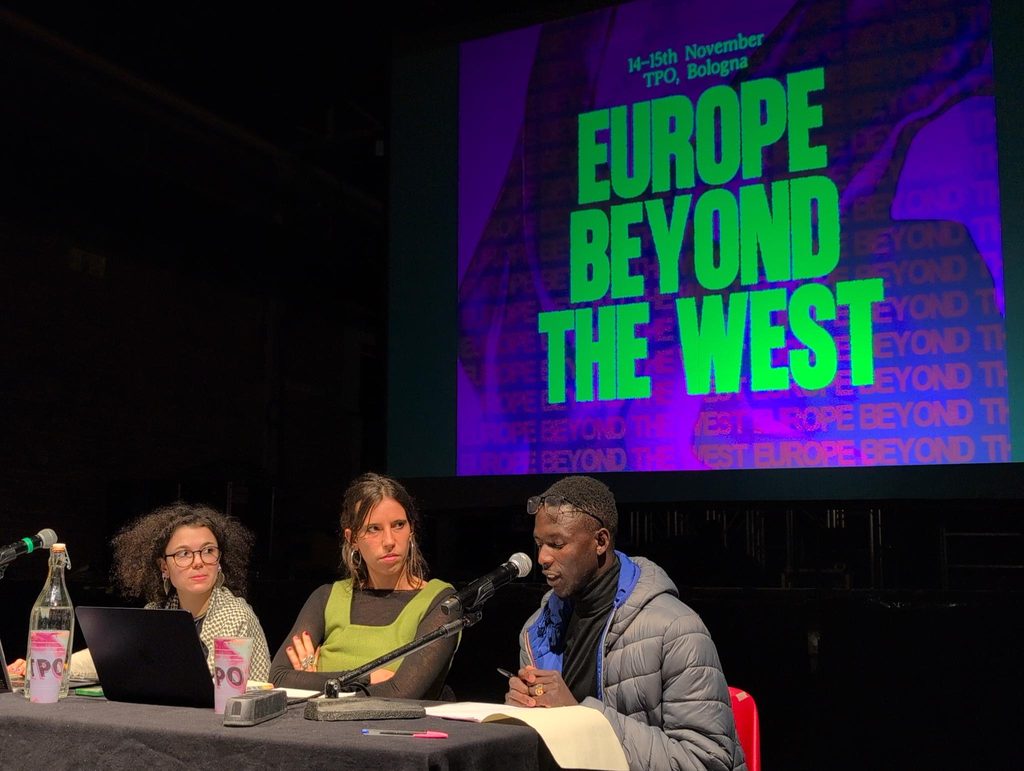
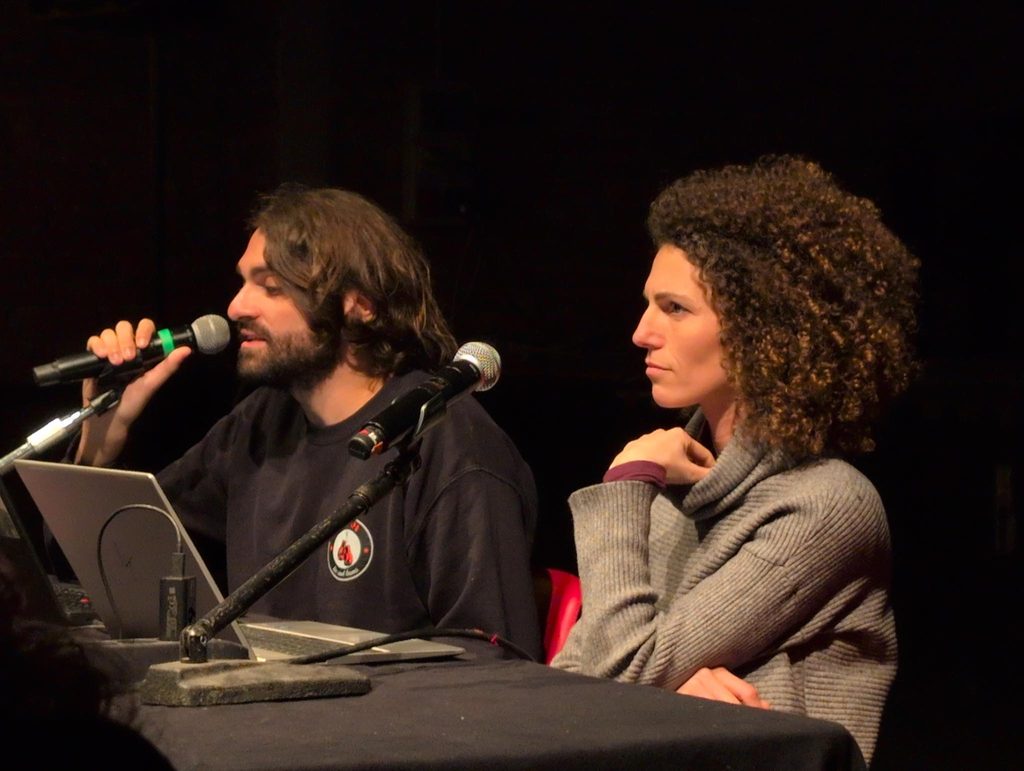
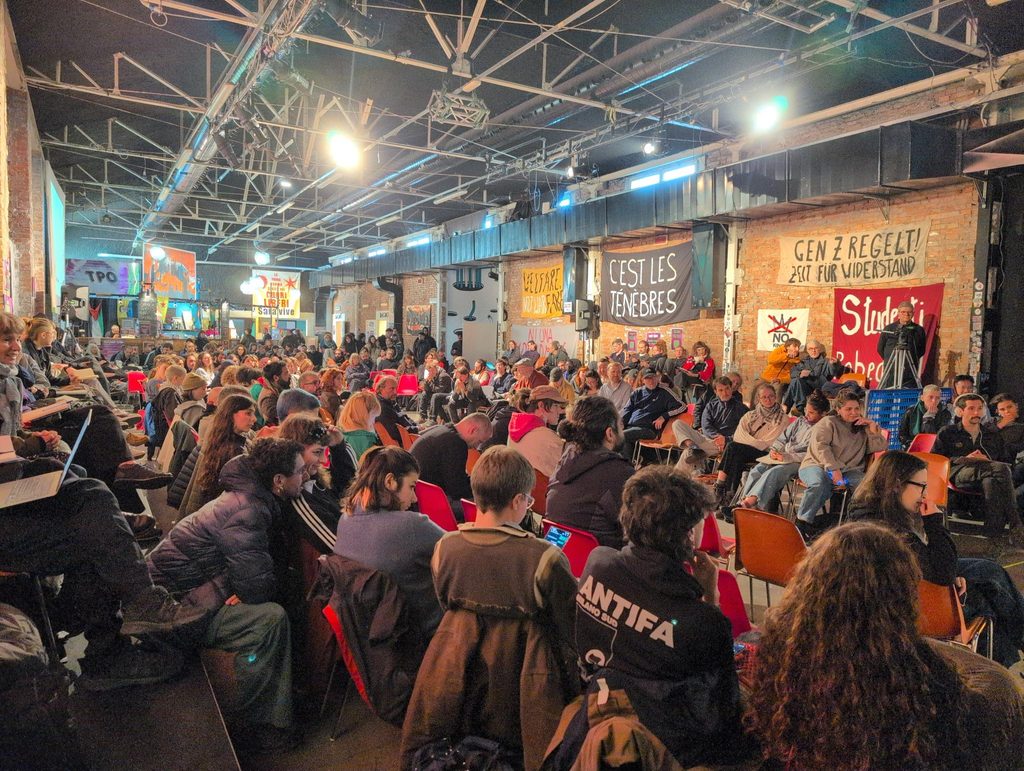
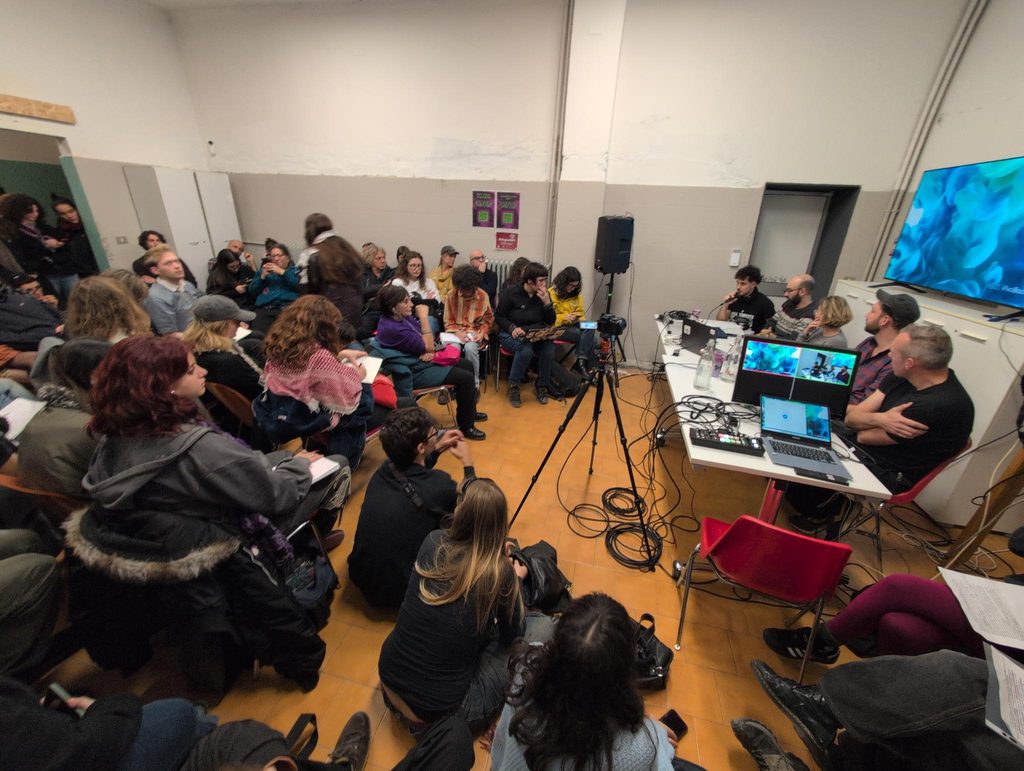
On 14 and 15 November 2026, at Municipio Sociale TPO in Bologna, more than 500 people and 80 organisations gathered from all over Europe – Italy, Serbia, Albania, Spain, Germany, Belgium, Portugal, the United Kingdom, Georgia, Kosovo, Ukraine, Switzerland, Greece, Poland, Sweden — and beyond, from Iran to the Kurdish movements, from Palestine to Kenya, from Sudan to Libya, came together for Europe Beyond the West. Our starting point was that Europe as we have known it is over: it has entered a constituent phase that others have opened from above, with remigration, austerity, sovereignism, rearmament and war. We want to contest it, not to save the Europe of treaties, banks and borders, but to build the Other Europe: young, antifascist, transfeminist, ecological and anti-capitalist, beyond the West.
These days have given us some firm points to start with. Antifascism against remigration and against the criminalisation of those who struggle: a transnational antifascism, in the streets and in the institutions. A total rejection of campism: the enemy of our enemy is not our friend. We stand with the Palestinian people against genocide; with those in Iran who are fighting the regime and, at the same time, the bombs of the United States and Israel; with those resisting Russian aggression in Ukraine. The fight against corruption: from the Serbian students, who have won, to the squares of Georgia and Albania. The right of resistance, to be practised against the capitalist revolution from above. Strike, as a crucial activity of workers and society through which express power and development of the organizations. That is why we stand strong against any practices to limit or criminalize strike actions in Poland, Italy and anywhere in Europe. The confederation of cities, territories, struggles, and new social and political institutions, against the nation-state. Transfeminism as an antidote to nationalism and militarisation, and as a source of alternative visions of security and self-defence.
The conference provided space for substantive discussion on Ukrainian defence against Russia’s invasion. It raised the question of how to oppose the capitalist-driven rearmament and militarisation of Europe and its member states, alongside austerity measures, while recognising that opposing the military-industrial complex should not mean undermine the material conditions necessary for Ukraine’s self-defence. As a starting point, the conference could not – and did not – aim to impose a consensus. We all recognise that addressing the war in Ukraine is essential to building the Other Europe. We must therefore continue and broaden this dialogue, drawing on the materials and contributions collected during the conference, making them available to those who could not attend in person, and encouraging further exchanges, also through comments and posts on the online platform Europe Beyond the West.
Building on this discussion, we shared an initial calendar of initiatives for the months ahead. We invite everyone to add further dates to this shared calendar, making it a tool to connect struggles and rapidly mobilise people across Europe whenever urgent action is needed in the turbulent months ahead.
- The European student strike on 20 November.
- The global day of action “Down with Data Centers” on 23–24 January, as well as the mobilisation against data centres in Frankfurt in June.
- Rome in March 2027, when the European Council will meet to mark the 70th anniversary of the Treaties of Rome. We can show that there is another power that wants to contend Europe, beyond the neoliberal institutions and the sovereigntist and authoritarian forces.
- The campaign against the BEDEX arms fair in Brussels in April 2027.
- Refugees in Libya’s Mitiga fundraising campaign, to be launched on 24 November, which aims to enable survivors to attend the first hearing of the trial in The Hague on 4 May, followed by the demonstration in Brussels on 8 May.
- The G20 in Manchester next autumn
The next months are marked by turmoil, elections, political struggles, wars and the rising of new movements of resistance. This situation calls for swift actions, but also not to find shortcuts to complex questions that must be addressed at least on a European scale: opposing remigration and securitarian policies, practising antifascism; fighting to de-weaponize AI and making it a common good, taking it away from the techno-oligarchs. And using every moment of contestation in our territories – elections, remigration summits, new data centres, arms factories and so on – to confederate our struggles and write together a manifesto for the Europe we want.
But we will not stop at resistance. We want to imagine and build the Other Europe as the form of another constitution: not just a formal charter or a material balance of powers, but another world. The European space is the minimum space in which to think of a political strategy that is revolutionary once again.
For all these reasons, the participants reaffirmed their intention to meet again, identifying March in Rome as a great possibility to do it.
Let’s make our Europe, starting today – the day we are finally able to say: we are nothing, and we should be everything.