
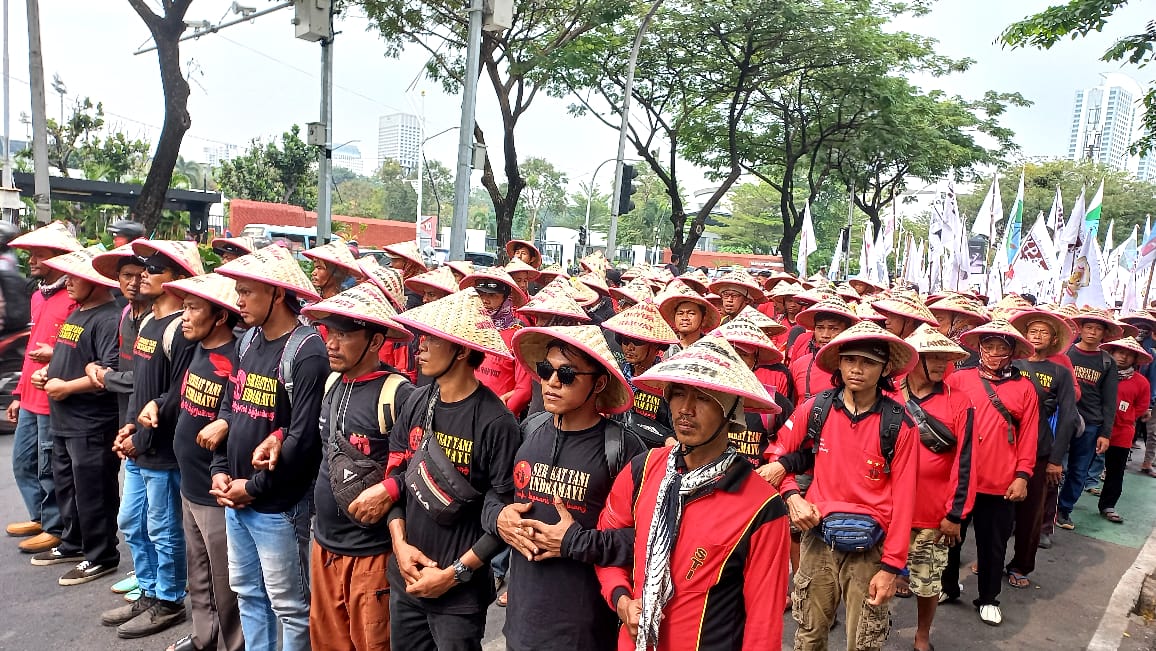
Below you will find two interviews with members and leaders of the Pasundan Peasants’ Union (SPP), a peasant organization in West Java, Indonesia. As an organization, they are in the process of building People’s Power as a strategy to reclaim their dignity as a people and take control of their own lives. These interviews provide a historical overview of the organization’s recent decades as well as the struggle for democracy in Indonesia in general. They also discuss their main political objectives and organizational methodologies, and explain part of their structure and internal operations. We believe that by learning about the SPP’s experience and the conclusions they have reached over the years, we can draw inspiration and good ideas for the struggles to build alternative social systems in many other parts of the world.
Interview with Agustiana, General Secretary of the SPP
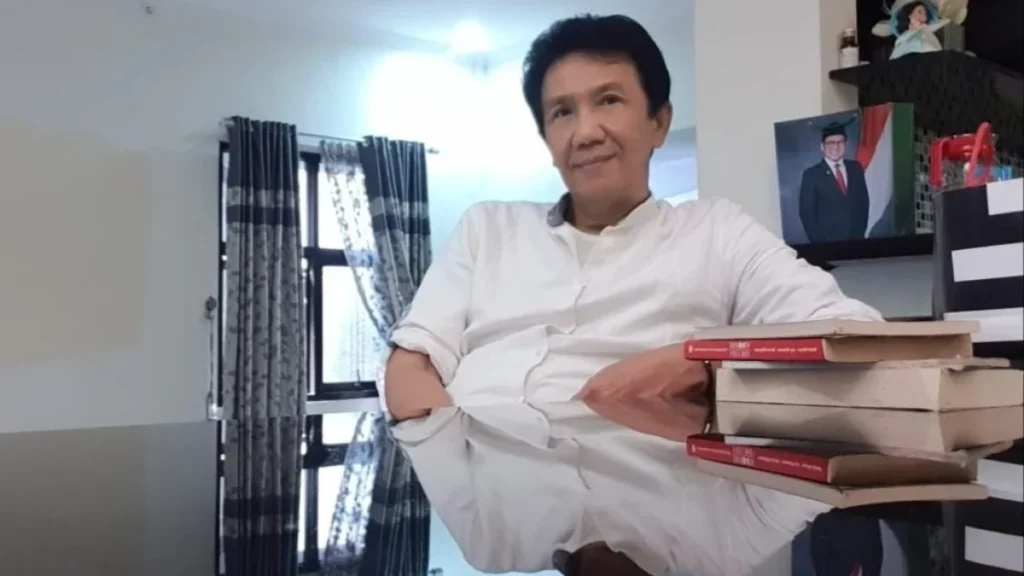
Could you introduce us to the SPP, its main objectives, a little of its history and, above all, what the organisation’s current situation is?
Yes. The history of the SPP1 was forged from social and student movements in defence of democracy. Initially, the SPP fought against the anti-democratic New Order regime during the Suharto era2 . Ultimately, the SPP’s role is to act as a vanguard, a militant organisation that strengthens the movement for democracy and popular welfare, with a focus on sectoral issues. Our role is to put the people at the forefront and build networks that can meet their needs.
Wherever there is a struggle for independence, of any nation, or any general social issue in the world, there must be a group of conscious activists who play a pioneering role, who are trustworthy, responsible, consistent and truly committed; only in this way can they inspire others to organise. In this way, the SPP focuses on connecting people with one another, on how to build democracy from within society itself.
For example, in the SPP we ally ourselves with indigenous communities, with fishermen, with peasants and with women; that is one of the aspects of the consolidation of our political programme. After consolidating the agrarian sector, we focus first on the land issue, on the struggle for agrarian reform, and then extend our struggle to the demand for civil rights and freedom of association. In this way, we organised ourselves even more closely alongside the workers. After organising the workers, we consolidated the student movement. As we wanted to bring together all the pieces of this democratic jigsaw puzzle, building on the pioneering efforts of the SPP, we created the KPRI (3 ) as our national umbrella organisation.
A struggle that began to take shape around the land issue and the fight for agrarian reform gradually evolved into a struggle for democratic popular sovereignty.
Our strategy for popular power, centred on agrarian reform, also involves the student movement. In this way, students can play an active role and begin to organise in other aspects of social life. Thus, the struggle for agrarian reform grows stronger.
We build networks around each social issue so that society can organise itself. One of the things we must do is to earn the trust of society by developing democracy within society itself.
Ultimately, this is how the Philippines gained its independence in the 1990s. How? Through a revolution. Subsequently, reforms were implemented, and this had an impact across Southeast Asia. We also provided support. A similar change also took place in Indonesia in the 1990s: we are connected, and this is how we currently collaborate with our community in East Timor.
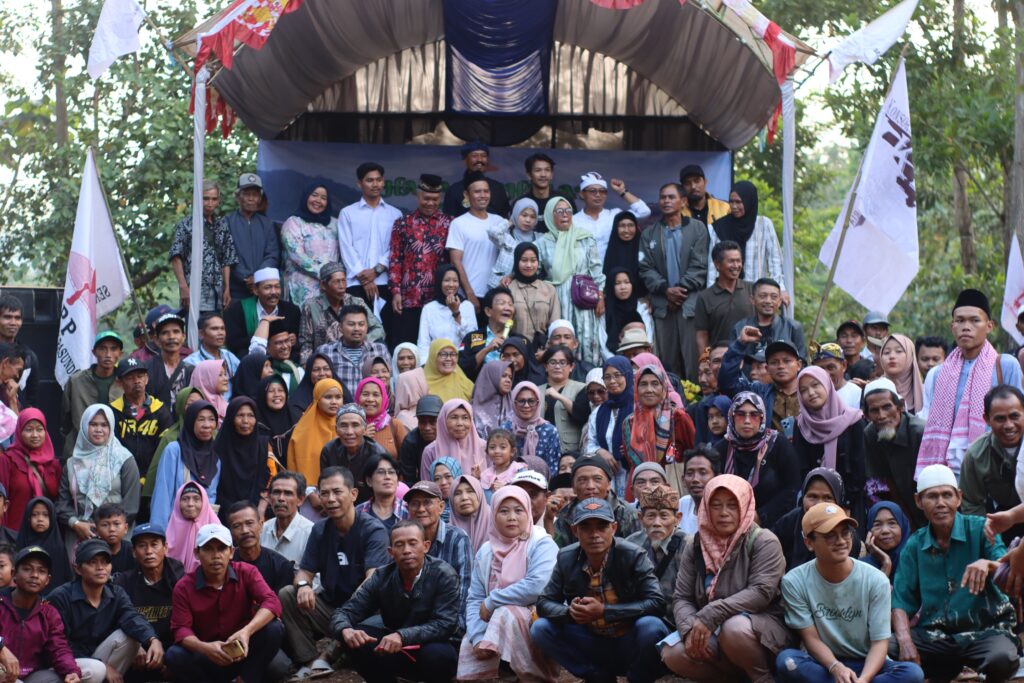
Within the context of the region—Southeast Asia—we are also involved in MASSA4 . This is precisely how we connect various elements across the agricultural sector, farmers, fishermen, and so on. This creates a strong network that builds mutual trust.
We are currently also participating in the GTA5 through MASSA, one of the coordinating organisations6 , with organised communities around the world that form part of this river of alternatives. We hope that all these processes can strengthen us mutually, making us stronger to promote democracy in our communities and achieve a better life.
Together with MASSA, we are also working in Myanmar, and our advocacy work there is not yet over. The same goes for Thailand, where the impact of political work is still very much felt. We are confident that, together with MASSA, we can connect with many other struggles across Southeast Asia. Through these networks, we can learn and share knowledge. And especially together with GTA, we hope that this will also develop into a larger network for grassroots-led alternatives.
Within MASSA, we also plan to set up our own university. To study forms of alternative social organisation. All kinds of alternatives. So that, in the future, this movement incorporates a systematic and organised learning process with clear objectives. Because we share and learn alongside the community from within the community itself. Drawing on our experience within the community, and on how the community also learns from us, we hope this will grow even further, generating knowledge from us and for us. In this way, we can ensure that several generations can continue this work, because I might die tomorrow, and so might you, but the new generations will continue working along these lines, and so we will learn from what we are doing now. Thus, hopefully, even if there are shortcomings in our struggle, it will be a success by applying what we can learn from others.
Now, let us put democracy into practice. As for our discussion, I hope we can continue it in the future. We must work to make it a reality, because our shared experience can strengthen our mutual practices.
The Philippine people’s movement is an example of this: thanks to internal solidarity, mutual support among citizens, and the community networks they managed to establish. The case of East Timor is similar, and that is how it achieved independence; the same applies to Aceh7 , which gained autonomy. As for all issues relating to democracy and civil rights, these must not be left in the hands of the state or institutions such as the UN. We have learnt that this must be a process built from the bottom up, through the sharing of knowledge, so that we can truly unite through the power of the community. We must build our own power.
One of the most striking examples of the need to develop this kind of strategy can currently be found in the United States. Donald Trump has lost his legitimacy. So, taking the US and Donald Trump as an example, this shows just how important people power is, doesn’t it? That is why this is also important for us: connecting with the people. That connection is our task, which is why the members of your organisation [referring to ADM] are also part of this network. We are equals. We also learn to build a people’s movement through civil society organisations. We continue to seek out who the leaders are within our community. Then, together with them, we can sit down, learn from one another and build people’s power.
Interview with Erni, vice-president of the SPP Women’s Organisation
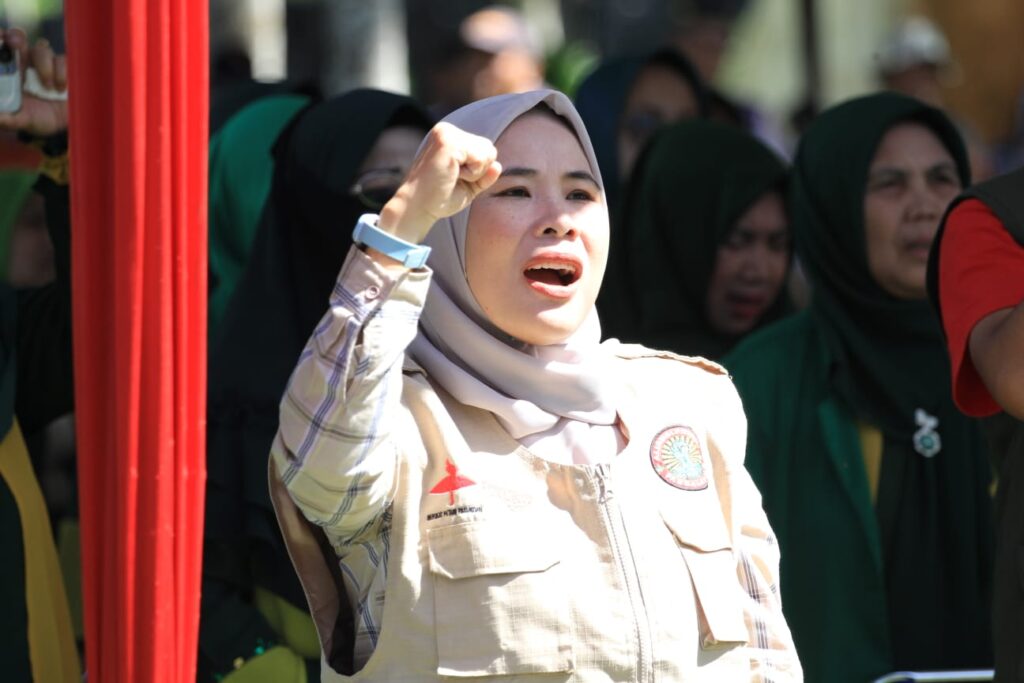
Could you tell us about the organisational structure of the SPP, particularly how women are organised? How are decisions made within the general and autonomous structures?
The origins of the SPP date back to the 1980s. At that time, Pro-Dem8 activists from the University of Indonesia — our seniors at the time, such as Agustiana — were actively involved in student youth organisations fighting for democracy against the Suharto regime. Because in 1980, Indonesia was under immense pressure; even the peasants were afraid to organise. This was mainly due to the trauma experienced by peasant organisations affiliated with the PKI (9 )—they were kidnapped, they were killed. So, specifically in West Java, in 1980, our elders faced an enormous struggle and difficulties in building this union. At this point, a window of opportunity opened up in which the government began to allow certain types of activism.
Then, in the 1990s, a new generation of activists emerged, which we call the reform movement. By then, the generation of the 1980s had already been replaced by a new generation. It was these activists of the 1990s, together with those of the 1980s, who overthrew Suharto and secured freedom of association, enabling the people to start forming trade unions and participating in various organisations. Now, the scope of the political struggle has become much broader and more extensive.
On 24 January 2000, activists from the 1980s and 1990s declared the founding of the Pasundan Peasants’ Union (SPP) in Garut. At that time, its members came only from Garut, Tasik and Ciamis. Just three cities.
That marked the beginning of the resurgence of organised farmers. Those traumas began to heal little by little, and we saw more and more young people, university students and school pupils joining the struggle. We dared to demonstrate and express our opinions in public. So we tried to instil that courage in the farmers themselves, so that they too would dare to raise their voices again, bearing in mind that they had been silenced in the 1980s. So they are regaining their freedom to be citizens of Indonesia, especially as farmers. This moment is also very important for the history of our trade union movement.
The Pasundan Peasants’ Union (SPP) was not founded by an NGO, but by young activists and students together with the peasants. These young people and students have a history of being persecuted, and even imprisoned, for trying to organise the peasants. This has been standard practice by the army since the Suharto era. Consequently, these activists are tenacious fighters. They are determined to unite and organise the people, so that farmers have the strength to fight for their rights. Particularly the right to land.
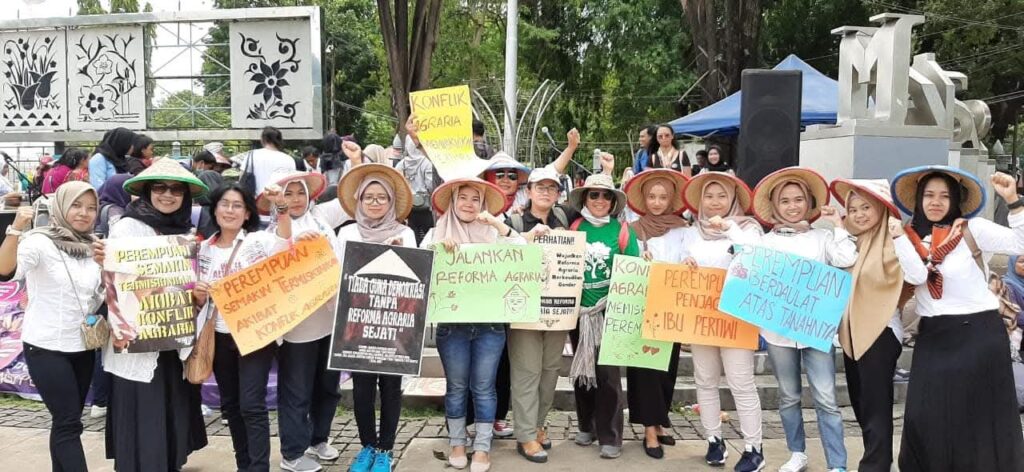
It is clear that the activists who are part of this union have a great deal of experience. Back then they were well-trained, because the army and the police constantly intimidated them and tried to arrest them. Therefore, these kinds of skills and abilities as activists really support and strengthen this movement significantly.
That is why there is no distance between these activists and us. They mix with the peasants. This gives rise to a new dynamic. There is no separation, no distance between the activists and the peasants, in particular. This new struggle has witnessed the growth of a new generation within its ranks, as these peasants have children who have become new activists. As a result, the movement has been strengthened because this new generation of activists, rooted in peasant life, understands the social culture of the peasants and the injustices they have faced for years, such as land expropriation by the state and land grabbing by capitalist companies. The activists have a deep understanding of what is happening to the peasants, of the land issues and of future objectives, particularly with regard to sovereignty.
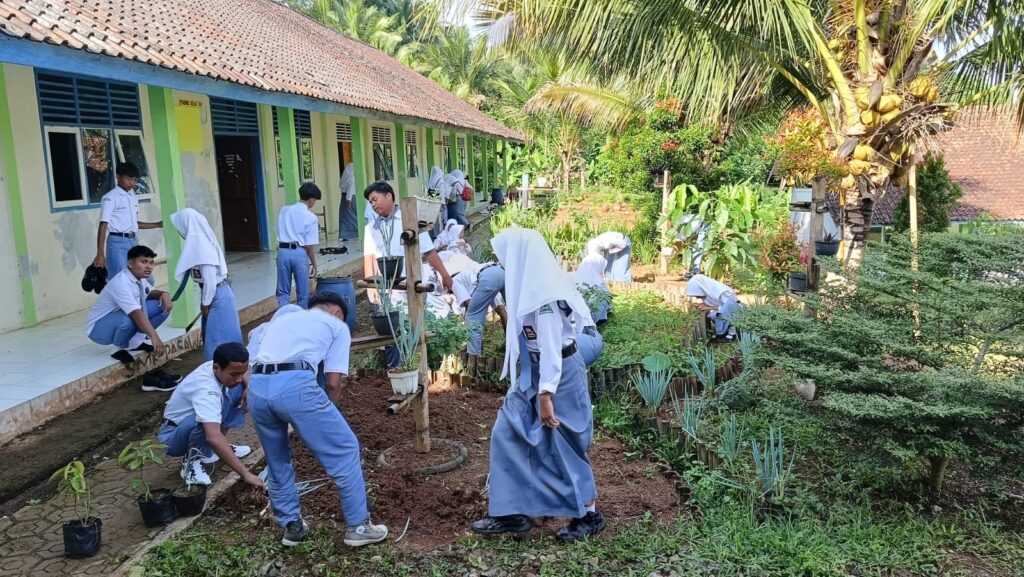
The approach adopted by the SPP stems from the fact that this struggle requires a long-term commitment. It is therefore clear that we cannot expect this struggle to be led solely by young people and students. Nor can we rely exclusively on older peasants—grandfathers, grandmothers, mothers and fathers. It is difficult to engage them intellectually because they are exhausted by work in the fields and other daily tasks. For this reason, the SPP founded a people’s school, the IKR Institute — Institute of Popular Leadership — to train future SPP leaders drawn directly from the peasant community. Both men and women. There is no discrimination; anyone with potential is accepted to be trained as a future leader of the SPP’s executive council. After founding the Institute of Popular Leadership and the People’s School, three years later, we founded a primary school, a secondary school and a rural vocational secondary school, to prepare the children of the peasants to become ideological leaders in the SPP and in their villages —in general, for this movement fighting for land—so that children and grandchildren understand what their grandparents and parents did. That is why we pass this on at school. This is a way of strengthening the new system we are building. The founding of the institute and these schools forms part of an educational project designed to prepare the new generation to return later to their home villages and become organised peasants.
As a second step, we ask ourselves: How can we empower women? Because women are aware that they possess extraordinary skills, and they need guidance to manage the family and all other social matters. Therefore, our union created an institution to revive those skills. An institution driven by women, for women, to empower themselves. In particular, women farmers come from a background where they sometimes do not finish school. Often they only reach primary school and must marry at an early age. So, to catch up with the male leaders, there is also a space for the women’s movement within the SPP, which is the Siti Halimah Institute. It is a special school for women within the SPP, for women farmers. The minimum age to participate is 15, up to 40. The philosophy of the Siti Halimah Institute is inspired by the foster mother of the Prophet Muhammad, who cared for, raised and educated Muhammad, shaping him to become a person committed to the fight against poverty and for humanity. The women are protesting against government control and surveillance. They want to follow their own path and demonstrate that women also have the capacity to raise their voices. We continue to see examples of how, when men are threatened, women show solidarity through women’s actions, bringing their children along to these actions too. Why do we do this? Because the government is often targeting husbands. Therefore, women must be the second line of defence and even the first line in certain situations.
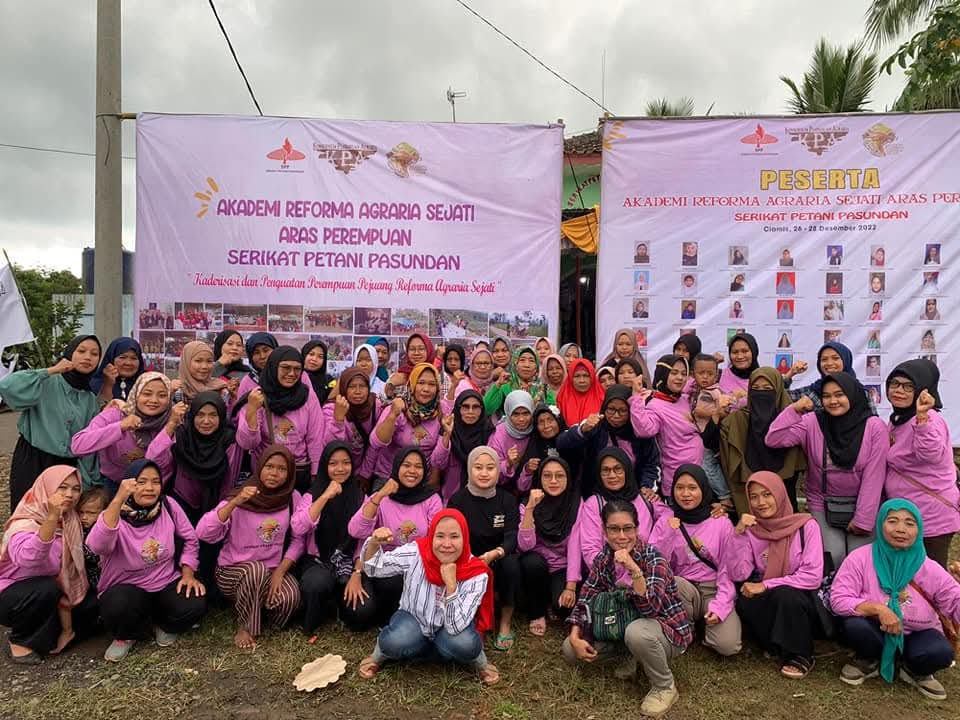
So why do we focus on women? Because women, first and foremost, are the educators of children. That is why these women, these mothers, must understand the context of the struggle. That is why there are special schools for women. Some may ask: ‘Why not for men as well?’ This is to overcome the disadvantage faced by women, because, first and foremost, women are often restricted from speaking out too loudly. That is the consequence of patriarchy. Forget about speaking to the government; even when they speak to their husbands, they often have to take a step back and bow their heads. Through the SPP, we raise awareness among women that they have the same rights. So that they can become leaders, fight for the common good, care about progress and get involved in the struggle as leaders. That is why we must make our voices heard by the government. We must care about humanity, which includes fighting for ourselves as women. And that’s difficult, isn’t it? You have to stand up to local village leaders, religious figures… That’s why this is such an important task, because women are fundamental.
There is no discrimination. All women can participate. Of course. And they have a place in leadership. Yes, because SPP members are like one big family. That is to say, sometimes both husband and wife take part in the struggle together. That is why the SPP has a policy stating that, if a woman is a member of the SPP, her husband is obliged to allow her to attend meetings, training courses and demonstrations. When there are protests, they go together. If there is a meeting, they can go together on a motorbike. In short, the husband must understand that he must not hinder his wife’s activities. Especially when it comes to her political rights. This is the organisation’s policy. Both husband and wife can be members of the union at the same time. If there is a family in which the woman is a member of the SPP, the husband must support her and not restrict her right to be an activist, take part in demonstrations or attend union meetings, etc.
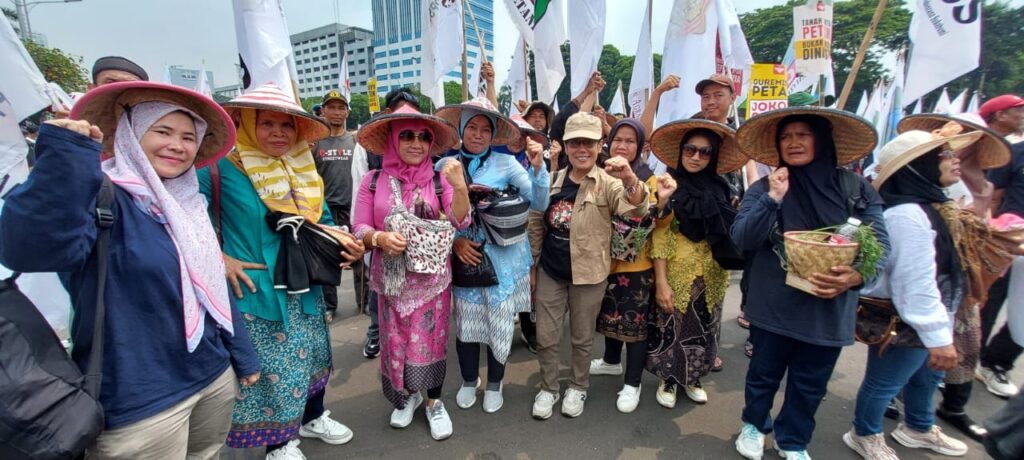
This can be seen in our recent activities. There are many young women present, all of them members of the SPP. They are part of the peasant movement. We organise joint protests at Parliament, at the headquarters and at government buildings. Also outside the presidential palace. We often raise our voices to the president and our parliament because they do not support the peasants. We are never invited to parliamentary sessions; on the contrary, we often demonstrate outside the parliament building. And in these demonstrations, women are always on the front line.
Being on the front line as women is also a tactic. Why? Because if men are at the front, the police act more repressively. What the police see are women speaking out. They are mothers, grandmothers. In the end, in cases like this, they lower their weapons. They don’t even dare to hit us. That’s why we hold peaceful protests. Why do we have to be peaceful? Because the people we bring are grandparents, aren’t they? Elderly farmers. Grandfathers, grandmothers, mums, dads — sometimes mums bring their young children. We take them to the demonstrations, we endure the heat, we sleep on the street, we wash at dawn, we start the protest at 8 in the morning and carry on until sunset, then return to our homes at night. That is why, at every demonstration, we emphasise and prioritise our demands. We don’t do this just to be praised or to attract attention. That’s the first point. The second point is that our struggle is on the ground. We’re going to defend our land, and if anyone dares to attack it, then we’ll raise our machetes to defend it. We’re ready to fight on our territory.
Could you tell us what kind of country you want to build? What is the SPP’s main objective?
Why are we waging this struggle? First and foremost, of course, we want to give independence to the peasants, whose land was seized by the colonisers during the colonial era; and even after independence, the government did not return that land to the peasants. Because the lands of these villages were turned into plantations, controlled by Perhutani10 , they were driven from their lands. Firstly, we want to restore their dignity, affirming that they are citizens of Indonesia and the rightful owners of these villages. Therefore, they must defend their villages and communities so that they are the ones in charge there—not outsiders, nor corporations; that is the first point, which is achieved by granting land rights and returning the land to the peasants.
Secondly, we also want to educate and empower them so that they can be independent, so that they are no longer deceived by the government or by those who monopolise capital, so that they are no longer poor. Then, of course, so that they can prosper, so that they can be happy—happy in this world and in the hereafter. The freedom to achieve their own sovereignty, bearing in mind, as we have already mentioned, history, the past, the intimidation we have suffered, the dispossession of land and all that sort of thing.
That is why we also have cooperatives. All kinds of cooperatives. Cooperatives are very widespread in this country. Credit cooperatives, savings and loan cooperatives, and also production cooperatives, where they can buy and sell local produce, to sell and process the harvest of the SPP members. All sorts of things. It is a self-sufficient economy that they manage themselves. A cooperative economy run for the most part by women.
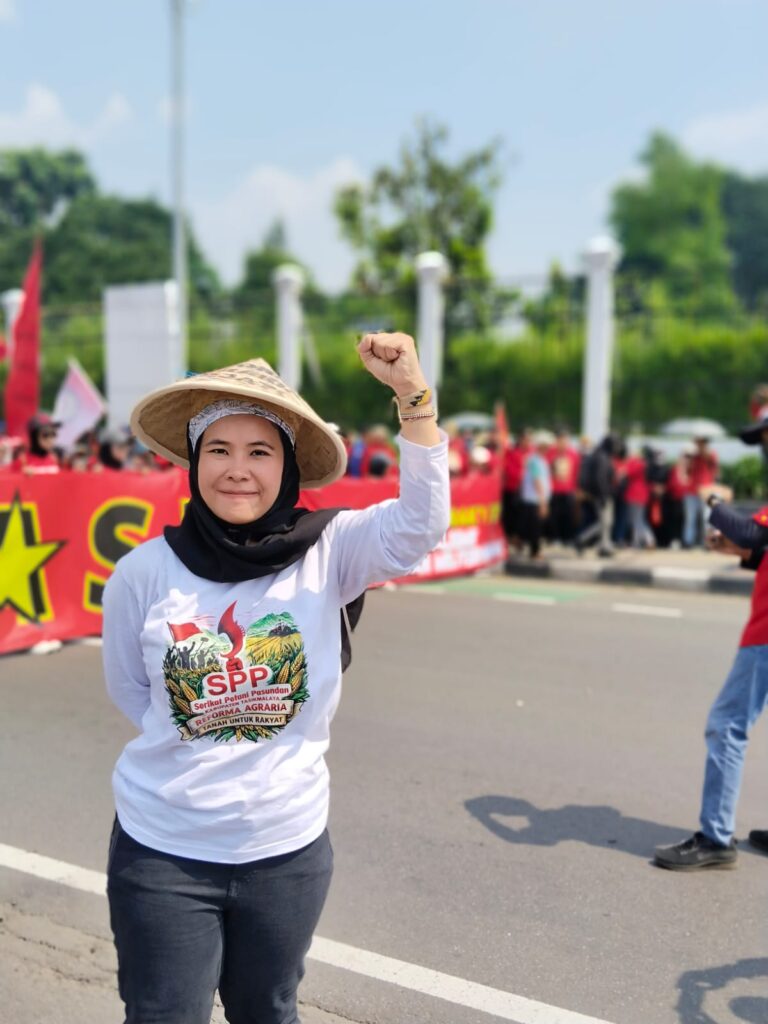
These interviews were conducted by ADM between April 13 and 15, 2026, in Bandung, Indonesia, as part of the 2nd General Assembly Meeting of the GTA (Global Tapestry of Alternatives)
1 Pasundan Farmers’ Union (SPP) https://www.noerfauzirachman.id/2009/10/the-making-of-sundanese-peasant-union.html
2 Suharto https://en.wikipedia.org/wiki/Suharto
3 Indonesian People’s Movement Confederation (KPRI) https://konfederasipergerakan.org/tentang
4 Southeast Asian Alternative and Solidarity Movement (MASSA) https://globaltapestryofalternatives.org/weavers:massa
5 Global Tapestry of Alternatives (GTA) https://globaltapestryofalternatives.org/index
6 Weavers https://globaltapestryofalternatives.org/weavers:index?redirect=1
7 Aceh Independence Movement https://en.wikipedia.org/wiki/Free_Aceh_Movement
8 ‘Pro-Democracy’
9 PKI https://en.wikipedia.org/wiki/Communist_Party_of_Indonesia